
Quake
Quake: Glutton The Forgotton One is a solo level design project focused on creating an authentic Quake-style map with combat encounters and exploration-driven gameplay.
Glutton The Forgotton One
Project Role
This Quake level was developed as a solo project at BUas. The goal was to design a combat-focused experience inspired by a medieval castle, blending classic Quake gameplay with modern design styles.
-
Designed and scripted combat encounters
-
Playtested and iterated with the Quake community
-
Built the entire level layout and modular kit
-
Textured and lit all environments
-
Focused on gameplay flow and combat pacing throughout the level

Trenchbroom

Solo

8 Weeks

Level Designer
Development
Modular Assets
I created modular assets to make development faster and more efficient. These include doors, stairs, arches, pillars, and other key structural pieces. The drag-and-drop workflow allowed me to focus on level design and iteration rather than constantly building new assets, helping maintain a consistent look while speeding up the creative process.
Wave one introduces the basic enemy, with all spawns visible to keep threats clear. After the first wave, the pushable car onboarding offers a short breather and a new mechanic to learn. The second encounter raises the difficulty, pushing players to communicate and work together.
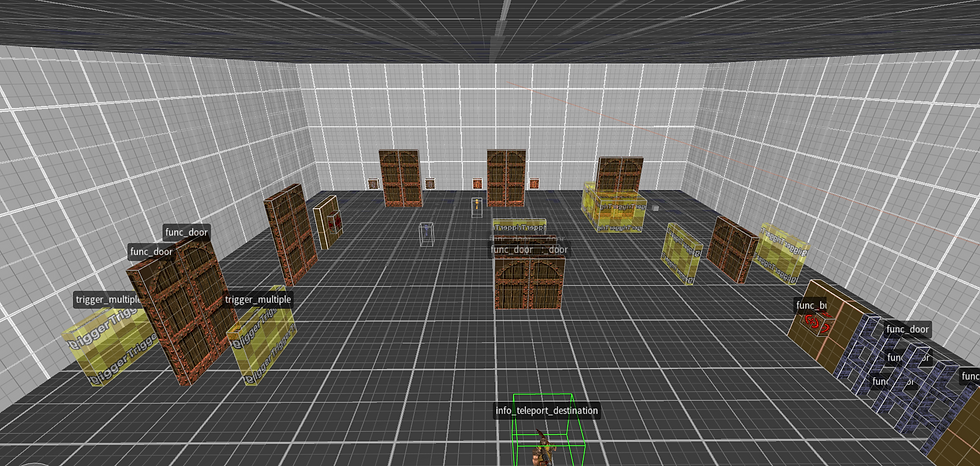
Another gym was used to prototype combat encounters, especially the boss fight. The design was quite tricky, so I dedicated a full gym to test and iterate. This made it easier to adjust difficulty, fine-tune gameplay, and see how far I could push the engine.
One gym was created to test all the scripting tools Trenchbroom offered. I tested different doors, enemies, teleporters, and other interactable objects to see how they worked. This helped me understand the engine’s limitations and create a modular testing space that I could reuse when building the main level.

Gyms

Iterations
Throughout development, I made several iterations to improve the overall gameplay flow. Many combat encounters were initially flat, so I added verticality wherever possible to make fights more engaging and dynamic. Most updates focused on balancing guns, ammo, and enemies, but the biggest change was the attic, which received a full overhaul to create a claustrophobic yet balanced environment. My main goal was to ensure that each area played and felt unique from the others.
Changes


Design Intent
Pillars
Each room features combat encounters, while corridors provide downtime for players to refill on utilities and prepare for the next fight.
Intense

In most areas of the level, the main objective is clearly visible as soon as the player enters a new room. This subtly guides the player’s attention, planting the goal in their mind before combat begins. Once the fight is over, they instinctively move toward the remembered objective. The secrets follow a similar logic. Players can see blocked-off areas containing visible rewards, encouraging natural exploration before progressing.
Escape
The player will make their way through the castle and explore several rooms in search for the keys to escape.
The castle hides many secrets and surprises. Players must keep their guard up while traversing the giant castle.
Surprises
Layout
The level begins in the castle’s prison and ends in the front gate, finishing the escape and level. The main hall serves as a central hub, a familiar point the player revisits throughout the level. The USP is the use of moving walls, which reveal hidden areas, rewards, or ambushes, keeping exploration unpredictable and engaging.
Difficulty
The difficulty of the level was designed to build up slowly as the player progresses. Each combat encounter introduces a new situation or space, keeping the gameplay fresh and engaging. This gradual increase in challenge leads up to the final boss fight. It is a tough fight but very satisfying once mastered.

Framing & Secrets


Before going up the stairs, the player will see the teleporter behind the barrier, hinting that the player will eventually reach this area.
After obtaining the golden key and finishing a tough encounter, players often forget about it. Once they exit the room, they’re immediately reminded of its purpose by spotting the locked door ahead.

Most players will check the other prison cells and will see the unreachable armor. Players are encouraged to explore and find access to the armor.

A significant upgrade lies beyond these bars. Players will pause before continuing, trying to find the entrance that leads to the reward.
Looking Back
Looking back, the Quake project was one of the most enjoyable experience I’ve had as a level designer. I really enjoyed working on a level for such an old and iconic game, exploring what was possible within its limits. Learning a new engine like Trenchbroom was both challenging and rewarding, and I’m grateful to the Quake modding community for their help with testing and valuable feedback. Overall, it was simply a fun and inspiring project to work on.
Creating modular assets early on made development much smoother and allowed me to iterate quickly on layouts and encounters. My testing gyms were also a huge help, letting me prototype scripting setups and boss fights before implementing them into the main level. These tools gave me the flexibility to experiment and refine ideas faster than expected.
If I could redo the project, I would develop my USP more early on and improve on my architectural assets to make the world feel even more immersive and unique. Despite that, I’m proud of how the final level turned out. The level ended up as a cohesive and challenging experience that captures the spirit of Quake while showcasing my growth as a level designer.
Research
Initial Idea
The initial concept centered around escaping the castle, starting in the prison and ending in the garden. To reflect the maze-like nature of real castles and optimize development time, certain areas were reused and reinterpreted throughout the level to create a sense of familiarity and spatial depth.

Before development, I studied Quake’s mechanics and castle architecture. Playing the game helped me understand its pacing, enemies, and weapons, while researching real and in-game castles guided the level’s layout and atmosphere.
Quake & Architecture
